
Restoring Walls Before Collapse Reaches Foundations
Stone Wall Repair & Replacement in Buckfield for walls showing shifting, separation, or visible lean
Stone walls that begin leaning outward or developing gaps between stones are displaying early failure signs caused by foundation settling, inadequate drainage, or freeze-thaw movement accumulating over multiple seasons. Stonewall & Repair evaluates damaged walls in Buckfield to determine whether selective repair can restore stability or whether full replacement is required to prevent eventual collapse. Walls that have lost their original vertical alignment or show cracking through individual stones typically need rebuilding from the base up, while structures with isolated bulging sections can often be repaired by removing and resetting affected areas.
Repair work addresses the underlying cause of failure—usually water pressure building behind the wall or inadequate base preparation during original construction—by adding drainage pathways and re-excavating to proper foundation depth. Grading corrections redirect surface water away from the wall face, reducing the seasonal freeze-expansion cycle that pushes stones out of alignment. Replacement projects involve complete deconstruction, base re-preparation with compacted drainage layers, and rebuilding using stones from the original wall supplemented with matching material where pieces have fractured.
Arrange an on-site assessment to identify the specific failure mechanism affecting your wall and review repair versus replacement recommendations.
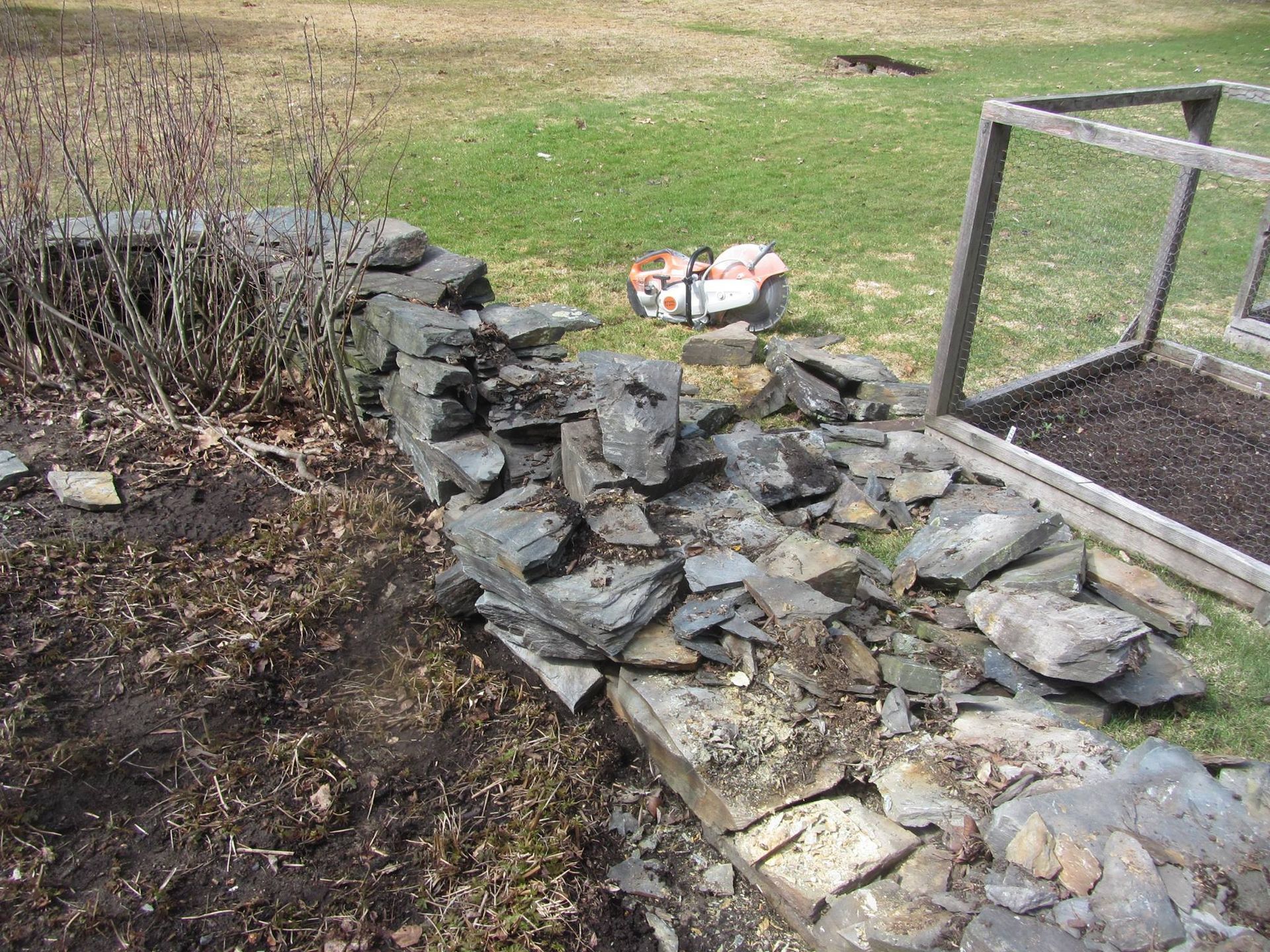
What Happens During Wall Restoration Work
Restoration begins with careful deconstruction that preserves usable stones while identifying pieces too fractured to reuse, followed by excavation to expose the original base and determine whether settling or frost heaving caused the structural failure. Foundation areas are re-graded and filled with compacted gravel that extends below the frost line typical for Maine soil conditions, creating a stable platform that won't shift during spring thaw cycles.
After repairs are complete, you'll see a wall that stands vertically without outward lean, with tight joints between stones that don't allow soil to wash through from the retained side. The structure no longer shifts noticeably during freeze-thaw transitions, and surrounding landscaping remains intact rather than eroding through gaps in a failing wall. Properties regain the clean boundary definition and terraced slope control that existed when the wall was originally constructed, often with improved drainage that prevents the same failure pattern from recurring.
Severely damaged walls sometimes require full stone replacement when original materials have fractured beyond reuse, while walls with intact stones but failed foundations can be rebuilt using the existing material after proper base preparation. The decision between repair and replacement depends on the extent of structural movement, the percentage of damaged stones, and whether drainage improvements alone can prevent future failure.
Questions Homeowners Have About Wall Repairs
Wall damage raises practical concerns about what can be saved, how long repairs take, and what prevents the same problem from happening again.
What causes a stone wall to start leaning or developing gaps?
Water accumulation behind the wall creates freeze-expansion pressure during winter months, gradually pushing stones outward until the structure loses its original vertical alignment and begins separating at joints.
How do you determine whether repair or full replacement is needed?
Walls leaning more than a few inches from vertical or showing cracks through multiple stones typically require complete rebuilding, while isolated bulging sections with intact surrounding areas can often be repaired by resetting affected stones and improving drainage.
What drainage improvements prevent future wall failure?
Grading adjustments slope the ground surface away from the wall, and gravel backfill layers behind the stones allow water to drain downward rather than building hydrostatic pressure against the structure during freeze-thaw cycles common in Buckfield winters.
Can stones from the original wall be reused during replacement?
Intact stones are sorted and reused during reconstruction, with fractured or spalled pieces replaced by matching material that blends with the existing weathered appearance.
How does repairing a wall affect surrounding landscaping?
Work areas are confined to the immediate wall footprint when possible, with excavation equipment positioned to minimize disturbance to established plantings and lawn areas adjacent to the structure.
Stonewall & Repair provides detailed evaluations that identify the specific failure cause and outline repair steps needed to restore structural integrity. Request a free evaluation to receive a repair plan tailored to your wall's current condition.