
Fixing Surfaces Before Uneven Stones Cause Falls
Patio Repair & Restoration in Buckfield for patios with settling, drainage problems, or cracked surfaces
Patios develop uneven surfaces when base layers settle unevenly or when water infiltration causes localized heaving during freeze-thaw cycles, creating trip hazards and areas where furniture rocks instead of sitting stable. Repair work addresses these functional problems by identifying the settlement pattern, removing affected sections, re-preparing the base to proper compaction standards, and resetting stones or pavers to restore level surfaces. Stonewall & Repair evaluates patio damage throughout Buckfield to determine whether targeted repairs can solve drainage and stability issues or whether full reconstruction is needed to correct widespread base failure.
Common problems include low spots where water pools and freezes, individual pavers that have cracked under point loads, and edge sections that have spread outward as restraint systems failed. Repair involves removing stones in affected areas, re-excavating to expose the base layer, adding or re-compacting gravel where settling occurred, and reinstalling surface materials with improved edge restraint and drainage slope. Grading adjustments redirect water flow away from the patio and prevent the infiltration that causes repeated heaving in the same locations each winter.
Schedule a free patio evaluation to identify specific problem areas and review repair options before the summer season begins.
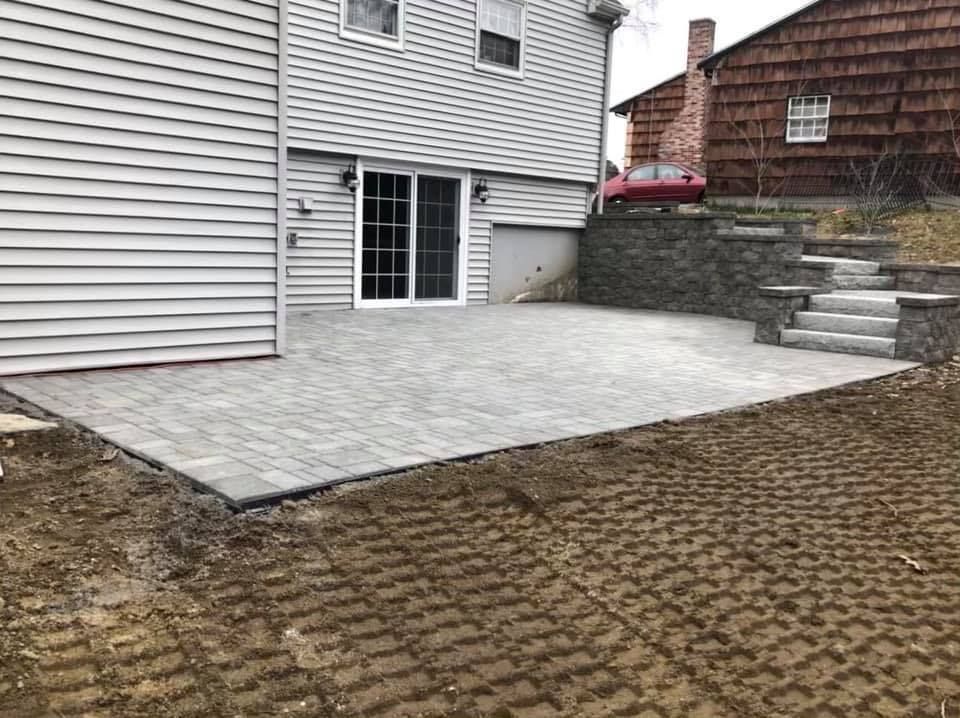
What Patio Restoration Actually Accomplishes
Restoration starts with mapping settlement patterns to determine whether problems stem from localized base failure, inadequate initial compaction, or drainage issues causing water to accumulate under specific sections. Damaged areas are deconstructed to expose base layers, which are then re-graded and compacted to meet depth and density specifications that prevent future settling under typical furniture loads and foot traffic.
After restoration, the patio surface sits level enough that tables and chairs don't wobble or tip, and water sheets off toward designated drainage areas rather than forming puddles that attract mosquitoes or freeze into slip hazards. Cracked or spalled stones are replaced with matching material, eliminating sharp edges and unstable pieces that shift when stepped on. The space becomes usable for outdoor gatherings without guests needing to navigate around sunken sections or avoid areas known to collect standing water after storms.
Major structural damage involving widespread settling or complete loss of base integrity typically requires full replacement rather than localized repair, especially when original construction lacked proper excavation depth or drainage provisions. Minor repairs addressing individual cracked pavers or small settled sections can often be completed without disturbing the majority of the existing surface. The choice depends on the percentage of affected area, the severity of base failure, and whether drainage improvements alone can prevent recurring problems.
Questions About Repairing Existing Patios
Patio problems prompt questions about what's worth fixing, how repairs hold up, and when replacement becomes the more practical option.
What causes sections of a patio to sink or become uneven over time?
Inadequate base compaction during original installation allows gravel layers to settle under the weight of furniture and foot traffic, while water infiltration creates voids beneath the surface as soil washes away or expands during freezing.
How do you fix drainage problems that cause water to pool on the patio?
Grading adjustments change the surface slope to direct water toward edges or designated drainage points, and base layer improvements allow water that does infiltrate to drain downward rather than creating hydrostatic pressure under the stones.
Can individual cracked pavers be replaced without redoing the entire patio?
Single damaged pieces can be removed and replaced with matching material as long as surrounding pavers remain stable and the base layer underneath hasn't failed, making this a practical repair for isolated damage in Buckfield properties.
When does a patio need complete replacement rather than targeted repair?
Patios with settling affecting more than thirty percent of the surface area, widespread cracking, or base layers that have washed out typically require full reconstruction to achieve stable, long-lasting results.
How does repairing a patio affect surrounding landscaping and lawn areas?
Work is contained to the patio footprint and immediate perimeter, with equipment access planned to minimize disturbance to adjacent plantings and turf areas that border the hardscape.
Stonewall & Repair conducts thorough patio evaluations that identify the root cause of surface problems and outline repair steps needed to restore functionality and safety. Request an evaluation to receive a detailed repair plan based on your patio's specific condition and damage pattern.