Slopes Managed Without Erosion or Instability
Retaining Wall Construction in Buckfield for managing slopes, controlling erosion, and stabilizing landscape structures
Slopes that erode during spring runoff or lose soil after heavy rain need retaining walls that hold grade while allowing water to drain through or around the structure rather than building pressure behind it. Stonewall & Repair builds custom retaining walls in Buckfield designed for residential properties where elevation changes create unusable slopes, drainage problems, or continuous soil loss. Walls installed without proper excavation, drainage provisions, or compacted backfill often lean or crack within a few seasons as freeze-thaw cycles shift the structure.
This service includes excavation to stable subgrade, installation of crushed stone footings, placement of natural stone or modular block systems, and integration of drainage pipes or gravel channels that prevent water from saturating the soil behind the wall. Grading expertise during construction ensures the wall supports the intended load without settling or rotating forward over time.
Arrange an on-site consultation to review foundation requirements and discuss retaining wall options for your property's terrain.
How Retaining Walls Address Slope and Drainage Issues
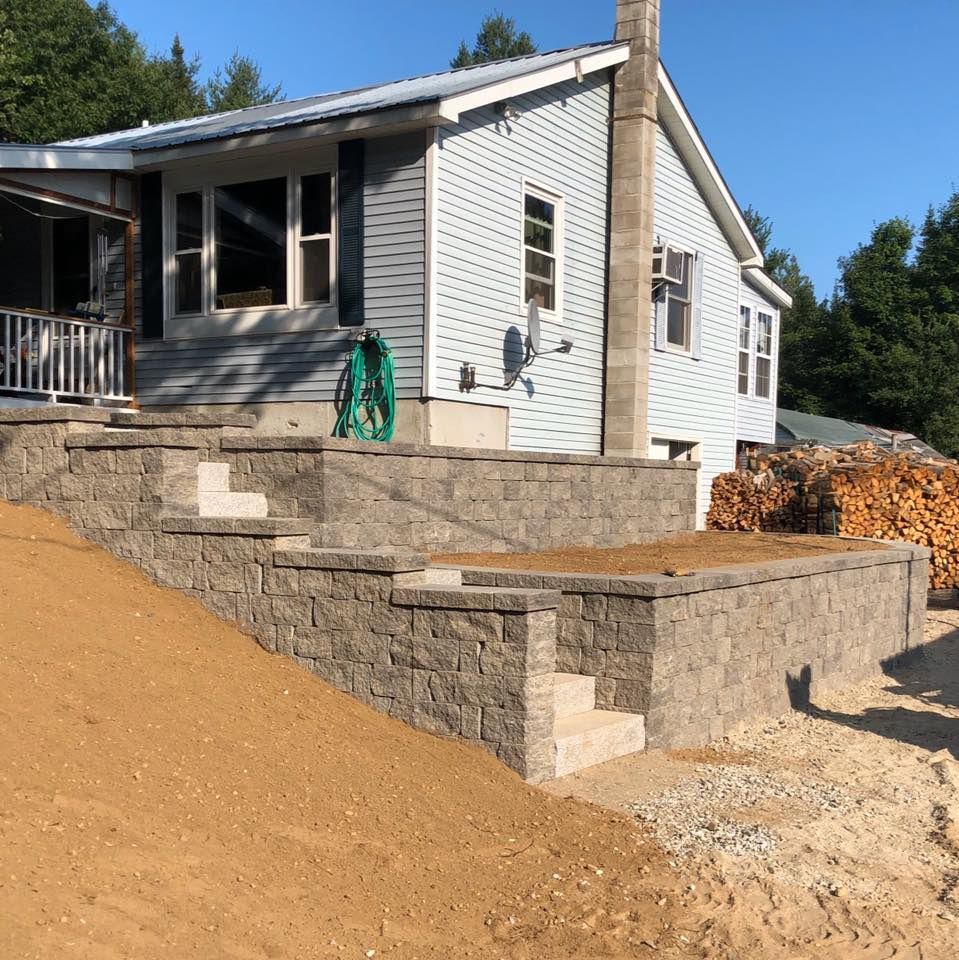
Building a retaining wall involves excavating a level base trench below the frost line, compacting crushed stone to create a stable footing, setting the first course below finished grade, and backfilling with drainage aggregate that allows groundwater to flow toward weep holes or perforated drainage pipe. This approach prevents hydrostatic pressure from building up behind the wall, which is the primary cause of leaning, cracking, and structural failure in retaining walls built without drainage provisions.
Once the wall is complete, you'll notice that slopes no longer shed topsoil during rainstorms, grade transitions create usable flat areas for patios or planting beds, and water exits through planned drainage points rather than pooling behind the structure or eroding around the edges. The retained area remains stable through freeze-thaw cycles because the drainage layer prevents saturated soil from expanding against the back of the wall.
Retaining wall projects can incorporate decorative stone veneers, terraced designs for larger elevation changes, or integrated steps that connect different grade levels. Walls taller than four feet typically require engineered designs and additional reinforcement depending on soil conditions and load requirements.
Questions Before Starting Your Project
Property owners typically want to know how retaining walls are constructed, what drainage methods prevent failure, and how material choices affect both appearance and long-term durability.
What determines whether a retaining wall needs engineered plans?
Walls taller than four feet, walls supporting structures or driveways, or walls built in unstable soil conditions generally require engineering calculations and reinforced construction methods to meet load and safety standards.
How does drainage work in a retaining wall system?
Crushed stone backfill allows water to filter down to perforated drainage pipe installed behind the base of the wall, which channels water to daylight outlets or drainage systems rather than letting it saturate the retained soil.
When is natural stone preferred over modular block systems?
Natural stone offers a traditional appearance that complements older homes and rustic landscapes, while modular block systems provide uniform dimensions and faster installation for walls requiring precise height and alignment.
What site preparation is required before wall construction begins?
Excavation removes unstable topsoil, exposes firm subgrade for footing placement, and creates space for drainage aggregate and backfill compaction. Proper site prep in Buckfield often involves clearing frost-heaved soil and verifying stable bearing capacity.
How long does a properly built retaining wall last?
Retaining walls constructed with adequate drainage, compacted backfill, and appropriate materials typically last thirty to fifty years, with natural stone walls often outlasting modular block systems when maintained correctly.
Stonewall & Repair completes excavation, drainage integration, and retaining wall construction in-house without relying on subcontractors, ensuring consistent quality from site prep through final grading. Request a free retaining wall estimate to discuss your property's slope management needs.