
Structures That Define Property Lines and Last Generations
Stone Wall Installation in Buckfield for properties needing permanent boundaries and landscape definition
Stonewall & Repair installs custom stone walls throughout Buckfield that serve as permanent property boundaries, landscape features, and functional retaining structures. The walls are built using materials selected for their ability to withstand Maine's freeze-thaw cycles, with each stone positioned to interlock naturally and distribute weight evenly across the foundation. Property owners who need to define spaces, retain sloped terrain, or add visual structure to their landscape rely on walls built to last decades without mortar failure or structural shifting.
Installation begins with excavation and grading to establish a stable base below the frost line, preventing seasonal movement that causes traditional walls to shift and separate. Drainage pathways are incorporated during construction to direct water away from the wall face, reducing pressure buildup that leads to bulging and collapse in wet seasons. Each stone is selected for shape and size compatibility with surrounding pieces, creating a stable structure that holds position under snow load and temperature fluctuation.
Schedule a site evaluation to review your property layout and discuss wall placement options suited to your terrain.
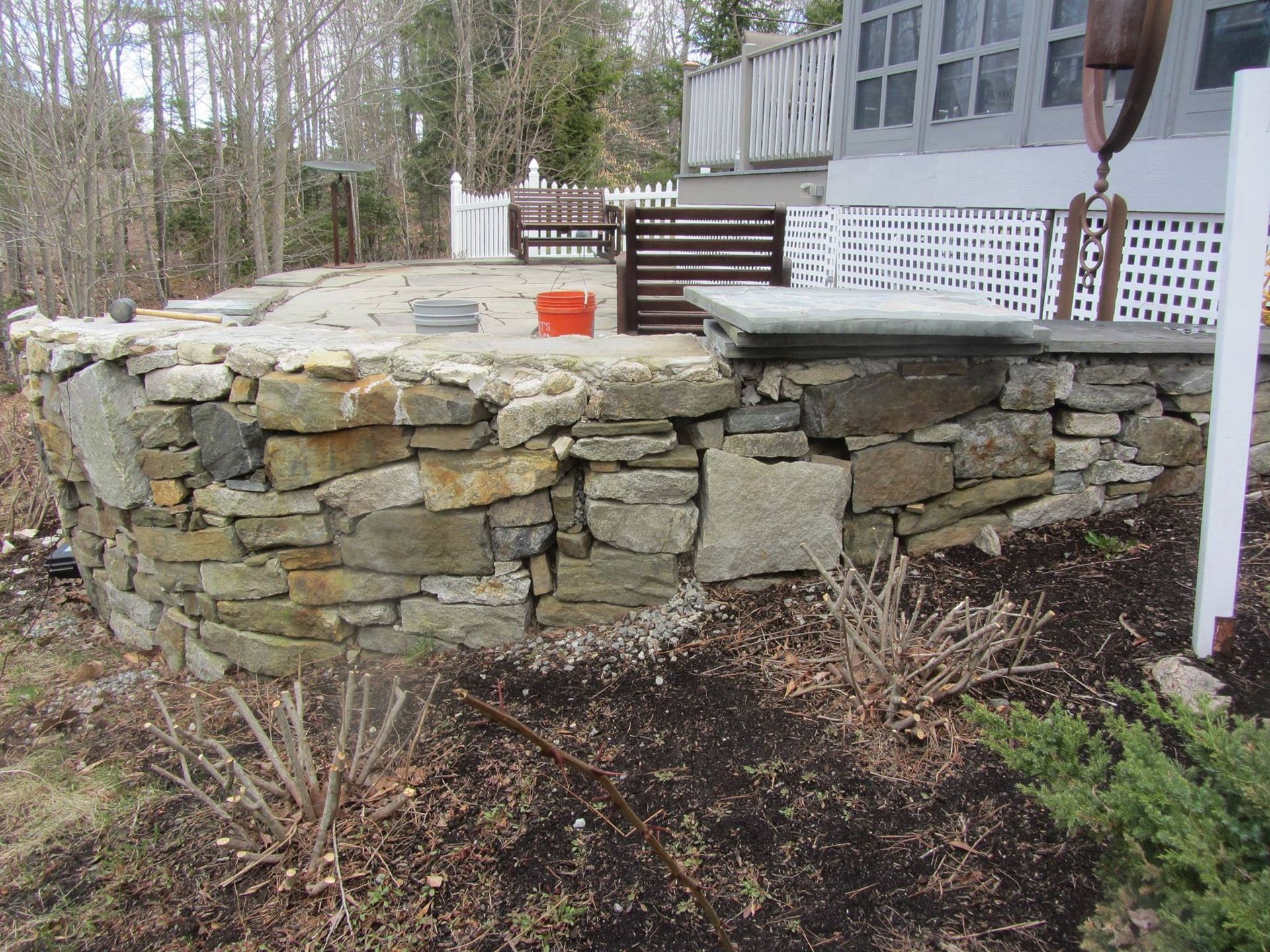
What Proper Stone Wall Construction Requires
Building a stone wall that remains stable through multiple New England winters requires starting with compacted gravel base layers that prevent settling and tilting as ground moisture levels change throughout the year. Stonewall & Repair completes all excavation and grading in-house, which allows direct control over base preparation depth and compaction quality rather than relying on separate contractors to meet structural specifications.
Once construction is complete, you'll notice clean sightlines along property edges, terraced garden areas that remain level during heavy rain, and boundary markers that don't require repainting or replacement. Decorative stone walls frame entries and pathways without obstructing snow removal equipment, while functional retaining walls hold slope positions that would otherwise erode during spring melt. The stone surface weathers naturally, developing lichen growth and color variation that integrates with the surrounding landscape rather than appearing newly installed indefinitely.
Stone selection affects both appearance and longevity, with dense granite and limestone options offering different visual textures and stacking characteristics. Wall height determines foundation depth requirements and influences decisions about batter angle—the slight backward lean that adds stability to taller structures. Decorative walls focused on appearance use different stone sizing patterns than boundary walls designed primarily for durability and visibility from roadways.
What Homeowners Ask About Wall Projects
Stone wall projects in Buckfield often raise similar questions about construction methods, timeline considerations, and how walls perform across seasons.
What preparation happens before stone placement begins?
The construction area is excavated to a depth determined by wall height and soil type, then filled with compacted gravel that drains freely and resists frost heaving common in Maine clay soils.
How does a dry-stacked stone wall remain stable without mortar?
Each stone is positioned to transfer weight downward and interlock with adjacent stones, creating friction-based stability that flexes slightly during freeze-thaw cycles without cracking the way mortared joints do.
When should wall installation be scheduled to avoid weather delays?
Construction proceeds most efficiently during dry periods between late spring and mid-fall when ground conditions allow excavation equipment to operate without creating rutting or compaction issues in surrounding lawn areas.
What distinguishes a decorative wall from a functional retaining wall?
Decorative walls focus on visual appeal and property definition with lower heights and varied stone patterns, while retaining walls are engineered to hold soil on sloped terrain and include drainage features that prevent water pressure buildup behind the structure.
How do drainage considerations affect wall longevity?
Grading adjustments and drainage pathways built into the wall structure prevent water from pooling behind the stones, which eliminates the freeze-expansion pressure that causes bulging and collapse over time.
Stonewall & Repair provides free estimates that include site-specific recommendations for wall height, stone type, and drainage integration based on your property's slope and soil conditions. Request an estimate to receive a detailed project outline for your landscape.